
Patrick Kawaye Logo Image
Patrick Kawaye

Hey There, Patrick Kawaye Here

A pro-active Economist and Policy Researcher with keen interest in Optimization and Stochastic Process Modeling; Application of Machine Learning, AI and Behavioral Experiments in Development Research.

About Me Before I get ahead of myself, it's probably a good idea to tell you a bit more about me.

So who am I?

I'm an Innovative researcher serving as a Research Fellow at the Center for Agricultural Research and Development at Lilongwe University of Agriculture and Natural Resources in Malawi. I'm pursuing a PhD in Agricultural and Resource Economics, hold a Masters in Agricultural and Applied Economics, and a BSc in Agribusiness Management from LUANAR.
Contact

My Skills

Research
Behavioural Experiments
Data Analysis
Python
Firebase
R Studio
GIT
Machine Learning
Figma
Adobe XD
Adobe Photoshop
Adobe Lightroom
Adobe Premier
Adobe NVivo
Arc GIS
Atlas TI
Flutter
Dart
Kotlin
Stata
XML

Projects Let's take a look at some of the projects I have worked on!

Study Time Planner Screenshots

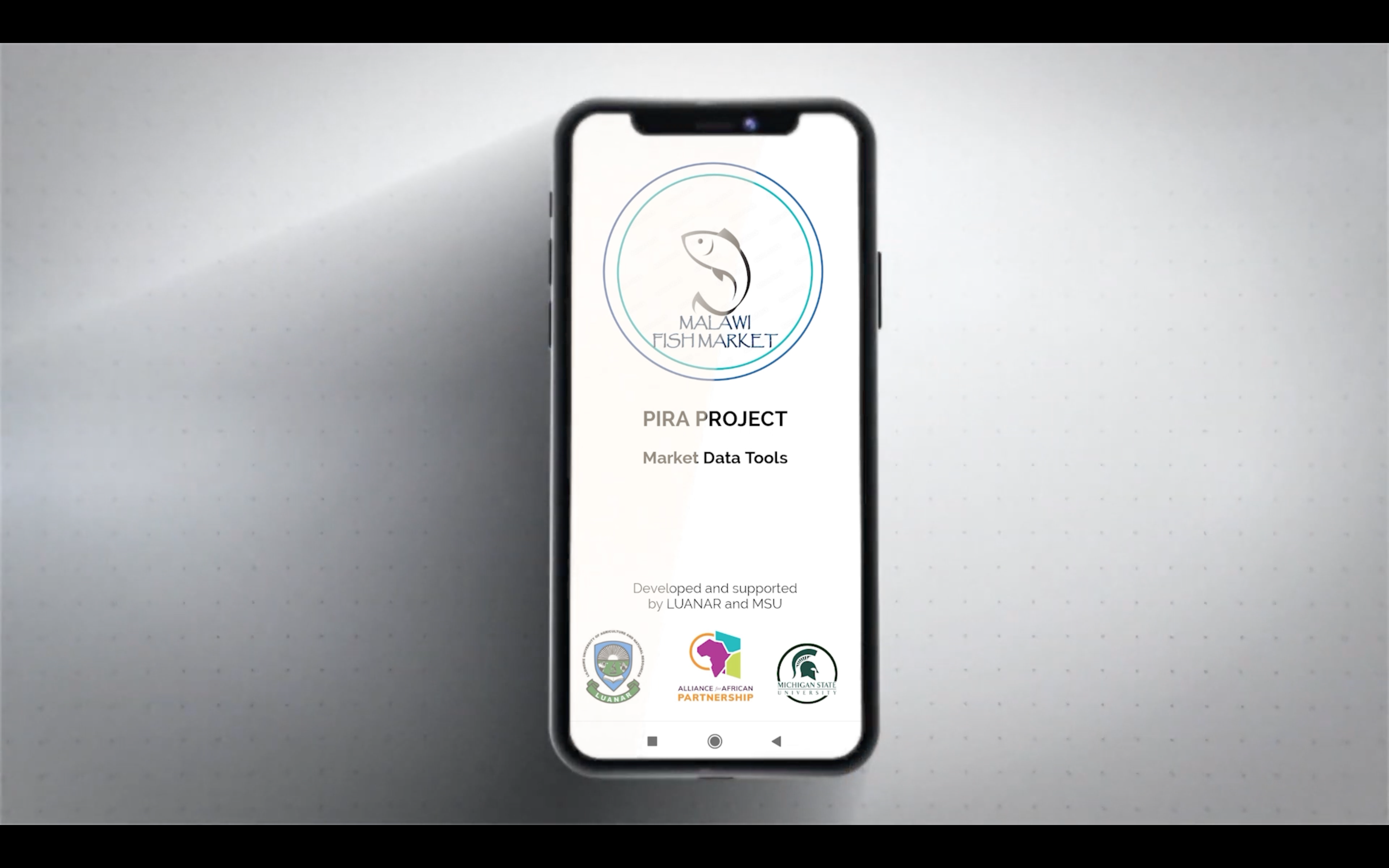
PIRA Project

LUANAR and Michigan State University implemented a collaborative research and outreach project to lay a foundation for developing empirically grounded policies based in an understanding of lived realities. The project aimed at promoting translational research at the science-policy interface for the benefit of people whose livelihoods depend on fish and lead to development of new data tools as the center point for scaling partnerships in the industry.

Project Details
Carb Exchange Malawi Screenshots

Carb Exchange Malawi

Developed for the Department of Human Nutrition and Health at Lilongwe University of Agriculture and Natural Resources led by Getrude Mphwanthe, Ph.D. A system which primarily assists diabetics in monitoring and maintaining optimal diets.

Project Details
Software Screenshot

Malawi Fish Market

Member of the project led by LUANAR and MSU with the primary objective of facilitating seamless connections between fish traders in Malawi and their customers.

Project Details

Publications If you'd like to get in contact with me, drop me an email at

pchimseu@luanar.ac.mw

Designing Digital Tools in Fisheries: What Fisherfolks Want in Malawi

Use of digital tools is rapidly transforming the world, and Information and Communications Technology (ICT) integration in fisheries presents great opportunities for enhancing fishing‐dependent livelihoods. This article employed latent class analysis and a multinomial logistic regression to explore preferred digital tools for fish traders to address the problem of lack of access to market information...


Connecting gender norms and economic performance reveals gendered inequities in Malawian small-scale fish trade

Women play key roles in fish value chains, especially post-harvest processing and marketing of fish products. However, gendered inequities in small-scale fishery value chains persist around the globe, limiting livelihood benefits for many women and their households. This study uses a mixed methods approach to investigate how gender norms shape gendered inequities in marketing margins for fish retailers in small-scale fishery value chains


The Corona pandemic among university students in Malawi

This study provides the initial survey data from a sample of 764 students at the Lilongwe University of Agriculture and Natural Resources (LUANAR), Lilongwe, Malawi. It aims to provide evidence on the extent of exposure to the pandemic among university students, their knowledge and beliefs related to the corona virus and the ways to protect oneself against getting infected, the sources of information that the students rely on, and other factors influencing their knowledge, beliefs, and behavior.


MEGA-FARMING SYSTEMS AND CLIMATE VARIABILITY: DO MEGA-FARMS ANCHOR SMALLHOLDER FARMING SYSTEMS IN CLIMATE RESILIENT AGRI- TECHNOLOGY ADOPTION?

Key Messages: The mega and anchor farm model can enhance agricultural productivity andcommercialization through improved input supply, mechanization, valueaddition, sustainable irrigation, and access to structured markets. However, the dominance of maize, with limited crop diversification, constrainsexpansion to other value chains.• Challenges such as inadequate farm inputs, weak irrigation infrastructure, andunstructured markets hinder farmer participation. Low mechanization levels increase labour intensity and inefficiency. A multistakeholder task force at the district level is crucial for bettercoordination, while mindset shifts are essential for promoting private-sector-ledsustainability of the model in Malawi.

Contact If you'd like to get in contact with me, drop me an email at

pkkchimseu@gmail.com